Reader-supported: we may earn a commission when you buy through our links, at no cost to you. As an Amazon Associate we earn from qualifying purchases. Learn more.
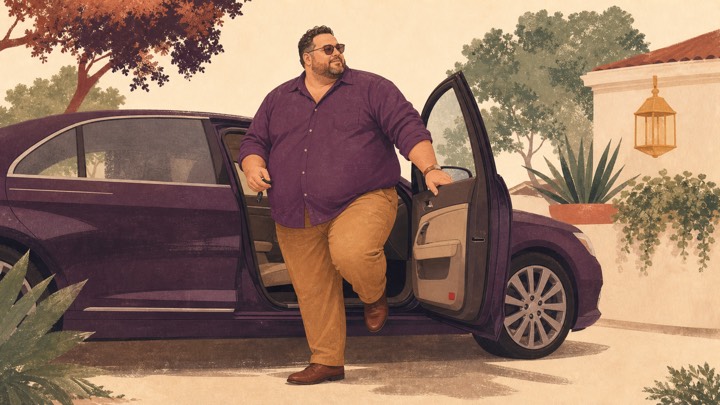
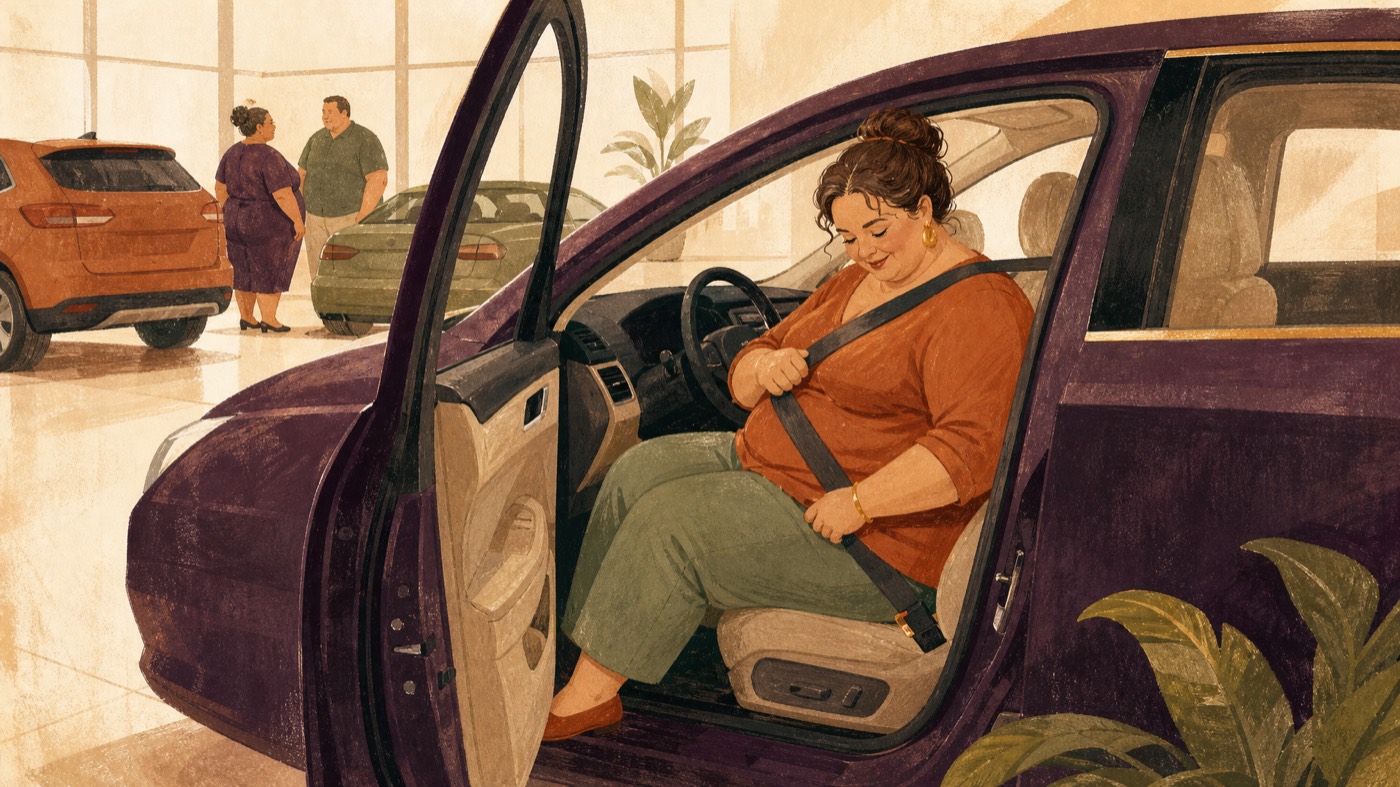
Buying a car in a bigger body comes with a question car reviews never ask: will I fit, comfortably and safely, for the next eight years? Plenty of fat drivers find out after signing that the seat bolsters dig into their hips, the belt barely buckles or the steering wheel sits closer to their belly than they'd like.
This is the checklist we'd want. It covers the specs to shortlist on, the body styles that suit bigger bodies, the features worth paying for, the two safety checks you shouldn't skip, and a test-drive routine that catches problems before the paperwork. For specific models and measurements, see our guides to the roomiest cars and SUVs.
Quick picks
Our picks
1Best for Getting Out of Any Car
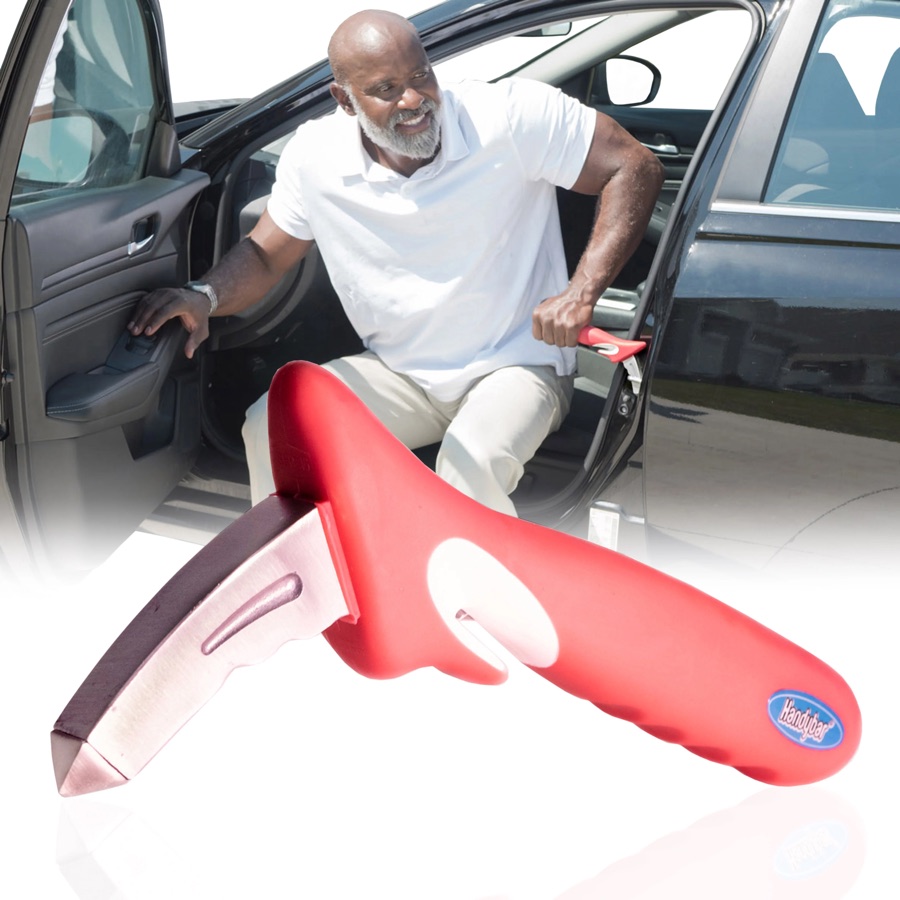
Stander HandyBar Vehicle Support Handle
Stander
- Key spec
- 350 lb
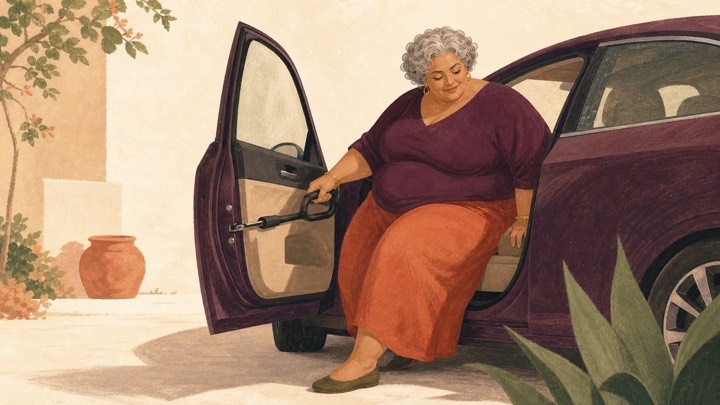
Whatever you buy, a striker-mounted handle gives you a solid, low handhold to push up from, and it moves between your car, rentals and friends' cars. It's listed at 350 lb and only fits doors with a U-shaped striker, so check yours.
Why we like it
- Listed at 350 lb
- No installation, so it moves between your car, a partner's car and rentals
- Built-in seat belt cutter and window breaker for emergencies
Keep in mind
- Only works on doors with a U-shaped striker; vehicles with a single striker bolt can't use it
- If you weigh more than 350 lb you're outside the listed rating; use it as a balance aid with your legs doing the work
- Check the listing for the current rating before you buy
2Best Fix If Your Trim Skips Cooled Seats
12V Ventilated Cooling Car Seat Cushion (Various Brands)
Various
Ventilated seats often live on pricier trims. If yours doesn't have them, a plug-in fan cushion moves air across your back and thighs. Check that it's as wide as your seat, and don't wrap a seatback with a side airbag without checking your owner's manual.
Why we like it
- Moves air where a fat body sits hottest: back and backs of thighs
- Plug-in, no installation
- Covers both seat bottom and back on most designs
Keep in mind
- Many sellers make near-identical versions; check the listing for dimensions and fan count
- Thin and narrow on some models; compare its width with your seat
- Don't wrap a seatback that houses a side airbag without checking your owner's manual
Step 1: Shortlist on the right specs
Every spec sheet lists four front-seat measurements. For a bigger body, read them in this order:
- Hip room: width at hip level across the whole front row, door to door, including the console. Check this first.
- Shoulder room: the same at shoulder height. It decides how much you rub elbows with a passenger.
- Legroom: measured with the seat all the way back. Long legs want it. Shorter drivers often care more about whether the wheel clears their belly.
- Headroom: seat to headliner. A moonroof or panoramic roof often costs 1 to 2 inches.
Our roomiest cars guide and SUVs and trucks guide compare these numbers across popular models.
What a spec sheet won't tell you: how wide the seat cushion is between its side bolsters, how wide the console is, how far the wheel telescopes, or how high the door sill sits. That's what the showroom is for.
Step 2: Pick a body style that suits your body
| Body style | Works well for | Watch out for |
|---|---|---|
| Minivan | Wide hips and shoulders; seats near hip height; sliding doors | Not everyone wants a minivan (they should) |
| Full-size SUV or pickup | The most width and headroom | A high step-in; plan on grab handles or running boards |
| Compact crossover | Sliding across instead of dropping down | Usually no wider than a midsize sedan |
| Midsize sedan | Long legs, lower prices | A low seat that's harder to climb out of |
| Sports car or coupe | Not much | Low seats, tight bolsters and long, heavy doors |
Step 3: Features worth paying for
- Power seat with height adjustment and lumbar. Small changes in seat height and tilt make a big difference to where the wheel and belt land on your body.
- Tilt-and-telescoping steering wheel. It lets you pull the wheel toward you or push it away, so you can keep a safe distance and still reach comfortably.
- Adjustable shoulder belt anchor. IIHS notes that adjustable D-rings let you raise or lower the shoulder belt so it crosses the center of your chest.
- Keyless entry and push-button start. There's no digging keys out of a pocket once you're seated.
- Ventilated (cooled) seats. If you run hot, they're worth more than heated seats, especially with leather.
- Grab handles and running boards on tall SUVs and trucks, or a lower step-in height.
- 360-degree camera and blind-spot monitoring, which mean less twisting to look over your shoulder.
And two things to skip: sport seats with big side bolsters, which can pinch wide hips and thighs, and panoramic roofs if you're tall.
Step 4: The seat belt and airbag checks
These two matter for safety, not just comfort.
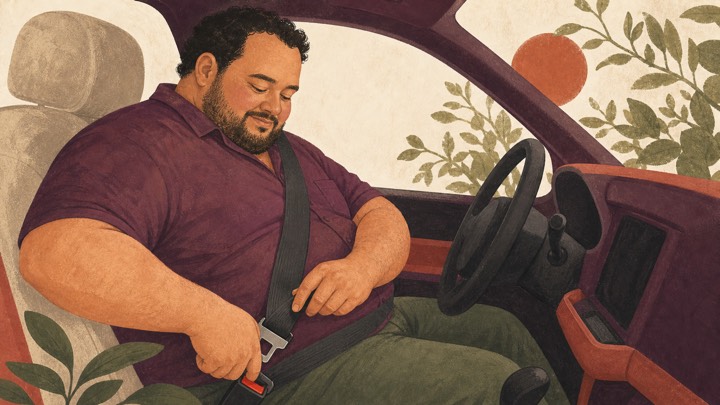
Seat belt fit. IIHS says the lap belt should lie snugly across the upper thighs or low on the hips, not the belly, and the shoulder belt should cross the center of your chest. That's harder in a bigger body. A University of Michigan study of drivers with BMIs from 31 to 59 found that higher BMI put the lap belt further forward and higher relative to the pelvis, which effectively adds slack to the belt. Belt geometry varies between vehicles, so check it in every car you test:
- Pull the lap belt down under your belly so it sits across your hips and upper thighs.
- Make sure the buckle latches without straining. Belts tend to feel tighter with the bulky coat you'll wear in winter.
- If the belt is short, ask the parts department for the automaker's extender for that exact seat before you buy. Our seat belt extender guide explains why it beats a universal one.
Airbag distance. IIHS says drivers should sit with their chests at least 10 inches from the center of the steering wheel, where the airbag deploys. Bring a tape measure. If you can't get 10 inches while reaching the pedals, try telescoping the wheel or raising the seat. IIHS adds that shorter drivers can often gain distance by reclining the seatback slightly. If no combination works, that car isn't the one.
Step 5: Do the payload math
Every car has a tire and loading placard on the driver's door pillar, and federal standard FMVSS 110 requires it to state that "the combined weight of occupants and cargo should never exceed" a specific number of pounds. If you regularly drive with other big passengers, add up your usual crew plus luggage and compare it with the placard on the exact vehicle. The limit varies by trim and options.
Step 6: The test-drive checklist
- Sit in the exact trim you'll buy. Seats, roofs and consoles change between trims.
- Stay seated for at least 15 minutes. Pressure points from bolsters, consoles and door panels show up slowly.
- Get in and out three times. Watch for the sill, the door opening and the roofline.
- Buckle up and check the belt as in Step 4, then measure your distance from the wheel.
- Drive on the highway and over bumps to check whether your thighs or knees hit the wheel, console or door.
- Check the back seat if you carry passengers, and bring the person who rides with you most.
- Ask for a longer test drive, or rent the same model for a weekend before you commit.
Before you sign
- Write down the exact trim, seat type and roof you tested. A "similar" car on the lot may have sport seats or a moonroof.
- If the right combination isn't in stock, ask about ordering it rather than settling.
- If you need an extender, ask the dealer to include the automaker's part in the deal.
- Once you've bought it, a door handle aid and a few road-trip basics help; see our car entry aids guide and road trip packing list.
Frequently asked questions
What kind of car is best for fat people?
Minivans have the most hip and shoulder room of any vehicles we've compared: the Kia Carnival lists 64.2 inches of front shoulder room and 59.8 of hip room. Full-size SUVs and pickups come next, and among sedans the Kia K5 and Dodge Charger are the widest we found. Fit depends on your shape, so use specs to shortlist and a long sit to decide.
How do I know if a car is big enough for me?
Sit in the exact trim for at least 15 minutes with the seat where you'd drive. Buckle up and check that the lap belt sits low on your hips, that your chest is at least 10 inches from the center of the steering wheel, and that the seat bolsters and console don't press into your hips or thighs. Get in and out a few times.
Can I get a seat belt extender from the dealer?
Often, yes. Ask the parts department for the automaker's extender for your exact model, year and seat. IIHS says a short belt may be lengthened with an extender from your vehicle manufacturer. Avoid universal extenders, and never use one with a child seat or booster.
How close can I sit to the steering wheel?
IIHS says drivers should sit with their chests at least 10 inches from the center of the steering wheel, where the airbag is. A telescoping steering wheel and a power seat with height adjustment make that easier. Shorter drivers can often gain distance by reclining the seatback slightly.
Get everything on this list
Send every pick to your Amazon cart in one click, or save them to My List to mix with picks from other guides.
How we pick: we compare manufacturer specs (weight capacity, seat width, size range), read reviews from bigger buyers, and check return policies. We don’t accept payment for placement. Specs change — confirm on the listing before you buy.