Reader-supported: we may earn a commission when you buy through our links, at no cost to you. As an Amazon Associate we earn from qualifying purchases. Learn more.
Big trucks and SUVs have a reputation as the default ride for big people, and the reputation is mostly earned: a full-size crew cab gives you 5 to 9 inches more front shoulder room than a midsize sedan. But they aren't all equal. Some full-size models give up 3 or more inches of legroom or 4 inches of headroom to their rivals, and that's the difference between comfortable and cramped.
We compiled front-seat dimensions for current 2025 to 2027 model-year pickups and SUVs from Kelley Blue Book and iSeeCars spec pages and Honda's own spec sheets. We haven't sat in all of these, so treat the tables as a shortlist builder and the test drive as the final word. Cars and minivans are covered in our companion guide.
Quick picks
- 1Best for Climbing Down From a Tall CabStander HandyBar Vehicle Support Handle 350 lb View on Amazon
- 2Best Strap Handle for Vehicles Without a U-StrikerStander CarCaddie Car Safety Grab Bar (Strap Handle) 250 lb View on Amazon
- 3Best Cushion for Long HaulsPurple Ultimate Seat Cushion 21.75 x 18 x 2.5 in Find on Amazon
Our picks
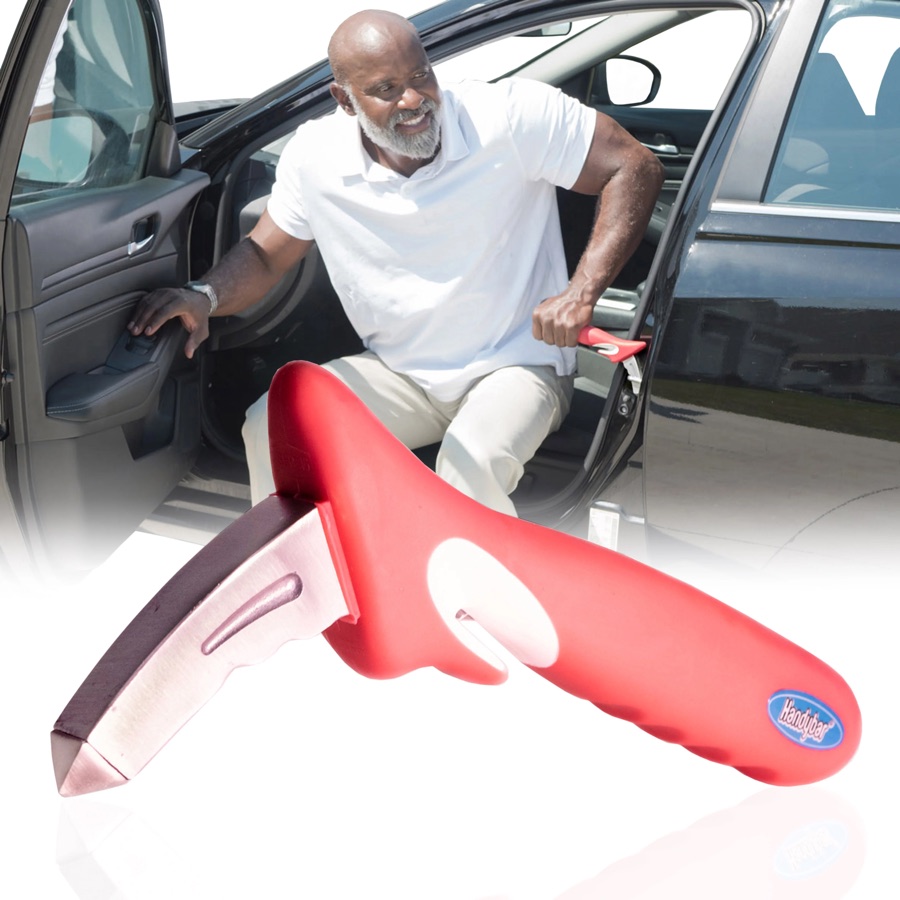
1Best for Climbing Down From a Tall Cab
Stander HandyBar Vehicle Support Handle
Stander
- Key spec
- 350 lb
Getting into a truck is a climb; getting out is a drop onto your knees and ankles. The HandyBar slots into the door's U-shaped striker and gives you something solid to steady yourself on as you step down. The listing rates it to 350 lb, and it moves between vehicles with no installation.
Why we like it
- Listed at 350 lb
- No installation, so it moves between your car, a partner's car and rentals
- Built-in seat belt cutter and window breaker for emergencies
Keep in mind
- Only works on doors with a U-shaped striker; vehicles with a single striker bolt can't use it
- If you weigh more than 350 lb you're outside the listed rating; use it as a balance aid with your legs doing the work
- Check the listing for the current rating before you buy
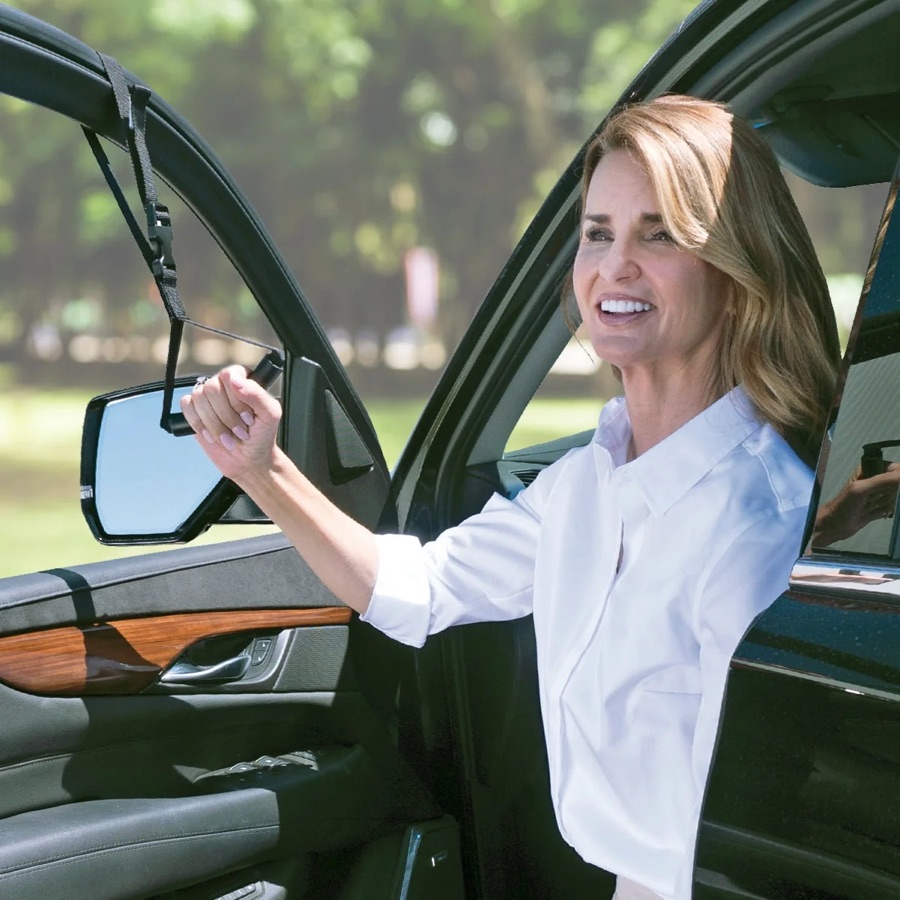
2Best Strap Handle for Vehicles Without a U-Striker
Stander CarCaddie Car Safety Grab Bar (Strap Handle)
Stander
- Key spec
- 250 lb
If your truck's door striker won't take a HandyBar, the CarCaddie buckles around the window frame and hangs a padded handle wherever you set the strap. It's rated to 250 lb on its listing, lower than the HandyBar, so use it to steady yourself rather than to haul your full weight.
Why we like it
- Works on vehicles that won't take a striker-mounted handle
- Adjustable strap sets the handle at a height that suits you
- Rubber grip is easy to hold
Keep in mind
- Listed at 250 lb, lower than the HandyBar's 350 lb
- A strap hanging from a door frame can swing; it steadies you more than it supports you
- Doors with frameless windows have no frame to buckle it around; check the listing for fit
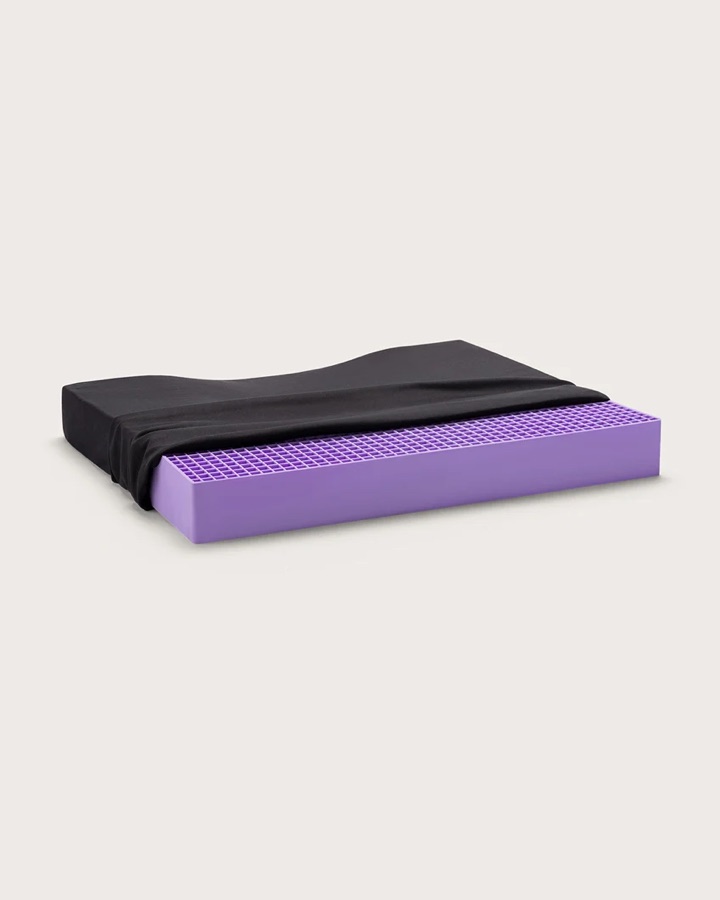
3Best Cushion for Long Hauls
Purple Ultimate Seat Cushion
Purple · $$$
- Key spec
- 21.75 x 18 x 2.5 in
Big cabs have headroom to spare, so a thick cushion is less of a trade-off than in a sedan. Purple's Ultimate cushion is 21.75 x 18 inches and 2.5 inches deep; Purple says it's designed for car and truck seats and is its pick for people over 200 lb. Don't leave it in a hot cab, since Purple warns that heat can warp it.
Why we like it
- Largest footprint in Purple's line at 21.75 x 18 inches
- Purple recommends it for users over 200 lb and for 8+ hour sits
- Grid design flexes instead of bottoming out like thin memory foam
Keep in mind
- 2.5 inches thick, so it eats headroom; tall drivers should check clearance
- Purple warns that heat can warp the grid; don't leave it baking in a parked car
- Pricey at about $159 on Purple's site
How to read these numbers
Hip room and shoulder room are measured across the whole front row, door to door, with the center console inside that number. They're for comparing vehicles, not a measurement of your seat. Legroom is measured with the seat all the way back, and headroom runs from the seat to the headliner. Where a trim with a sunroof or panoramic roof has less headroom, the lower figure is in parentheses. All figures are in inches.
Full-size pickups (crew cabs)
| Truck (model year, cab) | Headroom | Legroom | Shoulder room | Hip room |
|---|---|---|---|---|
| Chevrolet Silverado 1500 Crew Cab (2026) | 43.0 | 44.5 | 66.0 (64.5 ZR2) | 61.2 (60.8 ZR2) |
| GMC Sierra 1500 Crew Cab (2026) | 43.0 | 44.5 | 66.0 (64.5 AT4, AT4X) | 61.2 (60.8 AT4, AT4X) |
| Ford F-150 SuperCrew (2026) | 40.8 | 43.9 | 66.7 | 62.5 |
| Toyota Tundra CrewMax (2026) | 41.0 (39.3 Platinum, 1794) | 41.2 | 65.0 | 62.6 |
| Ram 1500 Crew Cab (2026) | 40.9 | 40.9 | 66.0 | not listed |
The Silverado and Sierra lead on both headroom and legroom by a clear margin. The F-150 has the widest shoulders, and among trucks with a published hip-room figure, only the Tundra edges it, by a tenth of an inch. The Ram is wide but has the least legroom of the group, a full 3.6 inches less than the GM trucks.
Full-size SUVs
| SUV (model year) | Headroom | Legroom | Shoulder room | Hip room |
|---|---|---|---|---|
| Chevrolet Tahoe (2026) | 42.3 | 44.5 | 65.6 | 61.5 |
| Chevrolet Suburban (2026) | 42.3 | 44.5 | 65.5 | 61.5 |
| GMC Yukon (2026) | 42.3 (40.4 Denali Ultimate) | 44.5 | 65.5 | 61.5 |
| Cadillac Escalade (2026) | 42.3 | 44.5 | 65.5 | 61.7 |
| Ford Expedition (2026) | 41.8 | 43.9 | 64.9 | 62.3 |
| Lincoln Navigator (2026) | 38.3 | 43.5 | 65.3 | 61.9 |
| Jeep Grand Wagoneer (2026) | 41.3 (39.3 upper trims) | 40.9 | 66.1 | 63.5 |
| Jeep Wagoneer (2025) | 41.3 | 40.9 | 66.1 | 63.4 |
| Toyota Sequoia (2026) | 39.2 | 41.2 | 65.0 | 62.6 |
GM's four body-on-frame SUVs share nearly identical front dimensions, so pick on price and features. The Wagoneers are the widest SUVs here but give up 3.6 inches of legroom to the GM models. The Navigator is the one to sit in carefully if you're tall: its 38.3 inches of headroom is about 4 inches less than a Tahoe's.
Three-row midsize SUVs
| SUV (model year) | Headroom | Legroom | Shoulder room | Hip room |
|---|---|---|---|---|
| Chevrolet Traverse (2026) | 42.6 | 44.3 | 62.3 | 58.7 |
| Hyundai Palisade (2026) | 41.5 (40.1 SEL Convenience and up) | 44.2 | 61.4 | 58.8 |
| Ford Explorer (2026) | 40.7 | 43.0 | 62.1 | 59.2 |
| Subaru Ascent (2026) | 41.2 (about 40 pano roof) | 42.2 | 61.1 | 57.8 |
| Volkswagen Atlas (2026) | 41.3 | 41.7 | 61.5 | 58.4 |
| Toyota Grand Highlander (2026) | 41.5 (40.0 Platinum) | 41.7 | 60.2 | 56.5 |
| Kia Telluride (2027) | 41.2 (40.0 most trims) | 41.4 | 61.6 | not listed |
| Honda Pilot (2026) | 40.5 (39.1 pano roof) | 41.0 | 61.9 | 58.4 |
The Traverse is the standout. On paper it has more front headroom than a Tahoe and nearly the same legroom, at a lower price point, though it's about 3 inches narrower at the shoulders. The Palisade's 44.2 inches of legroom is the other number worth noticing. Spec sources disagree on some panoramic-roof headroom figures (the Atlas, for one), so sit in the exact trim.
Midsize pickups
| Truck (model year, cab) | Headroom | Legroom | Shoulder room | Hip room |
|---|---|---|---|---|
| Chevrolet Colorado Crew Cab (2026) | 40.3 | 45.2 | 57.4 | 54.7 |
| Ford Ranger SuperCrew (2026) | 41.0 | 43.2 | 57.1 | 55.9 |
| Toyota Tacoma Double Cab (2026) | 39.7 (38.0 Limited) | 41.8 | 58.3 | 56.8 |
| Honda Ridgeline (2026) | 40.1 (39.5 moonroof) | 40.9 | 62.0 | 59.1 |
The Colorado's 45.2 inches is the most legroom of any truck or SUV in this guide, but midsize trucks are sedan-narrow. The unibody Ridgeline is the exception, with three-row-SUV width.
Don't forget payload
This is the spec almost nobody checks, and it matters more when the people inside are big. Every car, SUV and light truck has a tire and loading placard, usually on the driver's side door pillar, and federal standard FMVSS 110 requires it to state that "the combined weight of occupants and cargo should never exceed" a specific number of pounds. Four large adults plus luggage can approach that limit in some vehicles. Check the placard on the actual vehicle, since it varies by trim and options.
Getting in and out of a tall vehicle
Height is a mixed blessing. A truck seat near hip height means no deep squat, but you're climbing up and stepping down. Look for running boards or power steps, and an A-pillar grab handle on the driver's side. Some full-size trucks and SUVs offer air suspension that can lower the vehicle for entry; ask whether the trim you're considering has it. For portable handles and swivel cushions, see our car entry aids guide.
Buckling up in a big vehicle
Wide cabs don't guarantee a seat belt that fits. IIHS says a properly fitted lap belt sits low on the hips or across the upper thighs, not the belly. If yours won't reach, ask the dealer for the automaker's extender before buying anything online; our car seat belt extender safety guide walks you through it. Comparing smaller vehicles too? See the best cars for big and tall drivers.
Sources
Kelley Blue Book spec pages, with hip room from iSeeCars dimension pages where KBB doesn't list it: Silverado, Sierra, F-150, Tundra, Ram 1500, Tahoe, Suburban, Yukon, Escalade, Expedition, Navigator, Grand Wagoneer, Wagoneer, Sequoia, Traverse, Palisade, Explorer, Ascent, Atlas, Grand Highlander, Telluride, Colorado, Ranger, Tacoma. Honda figures come from Honda's spec pages for the Pilot and Ridgeline. Specs change by model year, trim and cab; confirm with the dealer.
Frequently asked questions
Which truck has the most legroom?
Of the trucks we compared, the midsize Chevrolet Colorado crew cab lists the most front legroom at 45.2 inches. Among full-size pickups, the Chevrolet Silverado and GMC Sierra crew cabs lead at 44.5. The Ram 1500 crew cab lists 40.9.
What is the best SUV for a fat person?
For width, the Jeep Wagoneer and Grand Wagoneer list the most front hip room of the SUVs we compared, at 63.4 to 63.5 inches. For an all-round fit, the Chevrolet Tahoe and Suburban, GMC Yukon and Cadillac Escalade combine about 42.3 inches of headroom with 44.5 of legroom and 61.5 or more of hip room.
Are midsize trucks roomy enough for big drivers?
For legroom, often yes; the Chevrolet Colorado lists 45.2 inches. For width, not really: the Colorado, Ford Ranger and Toyota Tacoma all list about 57 to 58 inches of front shoulder room, similar to a midsize sedan and about 7 to 9 inches less than a full-size crew cab.
How do I find how much weight my vehicle can carry?
Look for the tire and loading information placard on the driver's side door pillar. Federal rules require it to state the maximum combined weight of occupants and cargo. Add up everyone riding plus cargo and stay under that number.
Get everything on this list
Send every pick to your Amazon cart in one click, or save them to My List to mix with picks from other guides.
How we pick: we compare manufacturer specs (weight capacity, seat width, size range), read reviews from bigger buyers, and check return policies. We don’t accept payment for placement. Specs change — confirm on the listing before you buy.