Reader-supported: we may earn a commission when you buy through our links, at no cost to you. As an Amazon Associate we earn from qualifying purchases. Learn more.
Car shopping when you're fat, tall or both is mostly a game of numbers nobody at the dealership mentions. A seat that feels fine to a 5-foot-9 reviewer can pin your hips between the console and the door, jam your knees into the dash or leave your hair brushing the headliner.
So we pulled the front-seat interior dimensions for current 2025 to 2027 model-year cars, crossovers and minivans from manufacturer spec sheets and Kelley Blue Book and iSeeCars spec pages, and lined them up. We haven't sat in every one of these; the numbers tell you which ones deserve a test drive. Pickups and big SUVs are in our separate SUV and truck guide.
Quick picks
Our picks
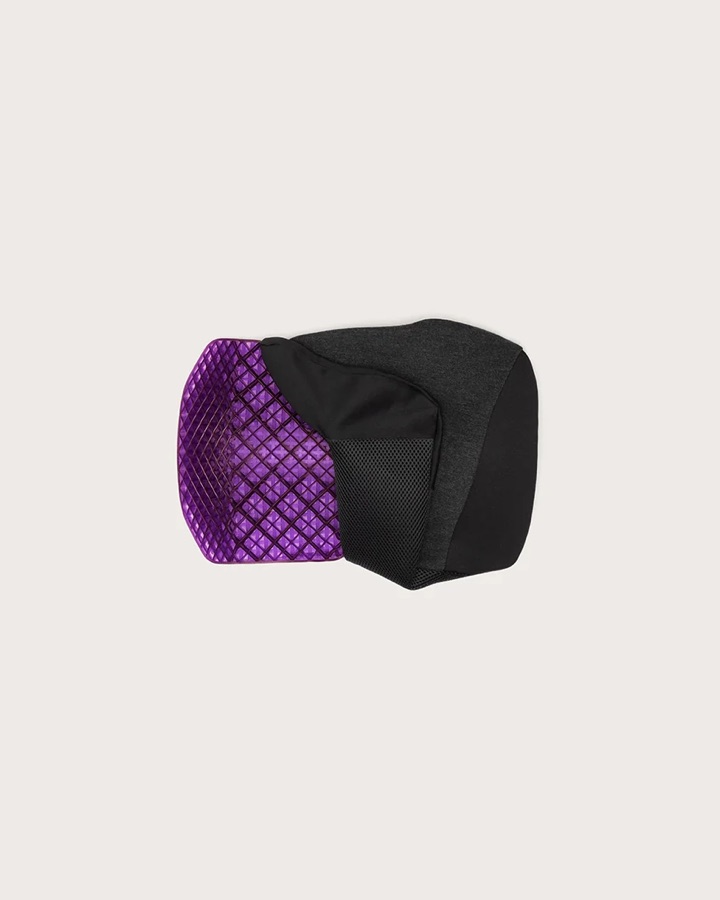
1Best Lumbar Fix for Any Car
Purple Back Cushion (Lumbar Support)
Purple · $$$
- Key spec
- 15.75 x 9.25 x 2.5 in
Most car seatbacks are shaped for an average torso, and a hollow lower back is one of the most common long-drive complaints. Purple's strap-on back cushion (15.75 x 9.25 x 2.5 inches) fills that gap in whatever car you end up buying. It moves you forward about 2.5 inches, so re-set the seat and wheel afterward.
Why we like it
- Strap and buckle keep it from sliding down the seat
- Grid design stays breathable compared with solid foam
- Fits most car seats, per Purple
Keep in mind
- 2.5 inches of depth pushes you forward; shorter-legged drivers may need to re-adjust the seat
- About $79 for a lumbar pillow
- Don't strap anything over a seatback that houses a side airbag without checking your owner's manual
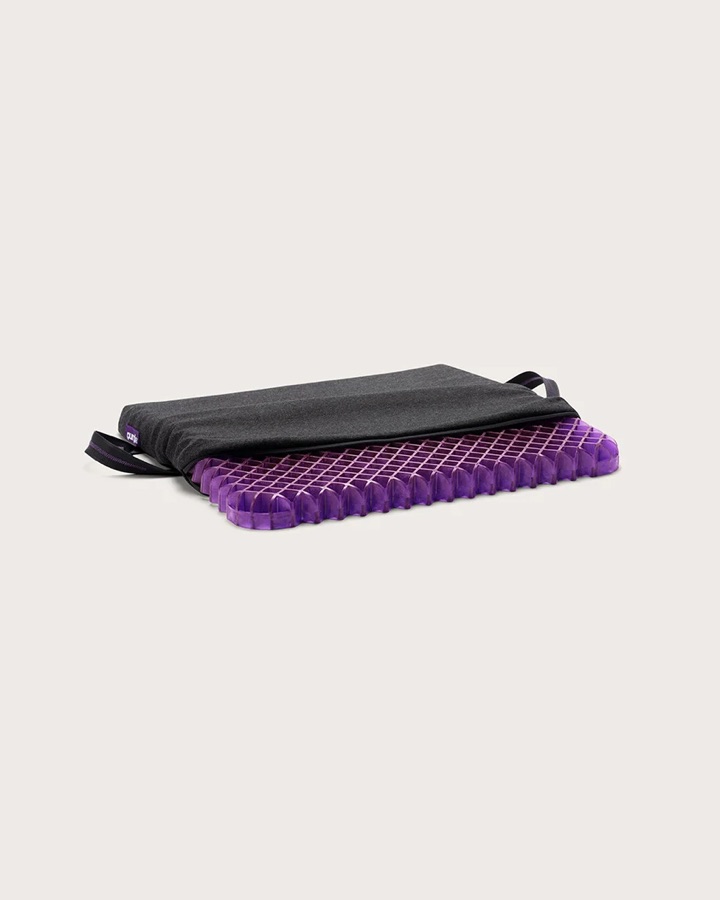
2Thinnest Cushion for Tall Drivers
Purple Simply Seat Cushion
Purple · $$$
- Key spec
- 17.5 x 15.75 x 1.25 in
If the car you love is tight on headroom, a thick cushion makes it worse. Purple's Simply cushion is just 1.25 inches thick, so you get some pressure relief while giving up far less headroom than a 2.5-inch cushion. At 17.5 inches wide it suits standard car seats, not oversized ones.
Why we like it
- Only 1.25 inches thick, so it costs little headroom
- Light at about 4 lb, easy to move between cars
- Machine-washable cover
Keep in mind
- 17.5 x 15.75 inches is narrower than many big drivers' seats and hips
- Purple says it's best for short commutes, not all-day drives
- Heat can warp it; Purple says to store it out of direct sun
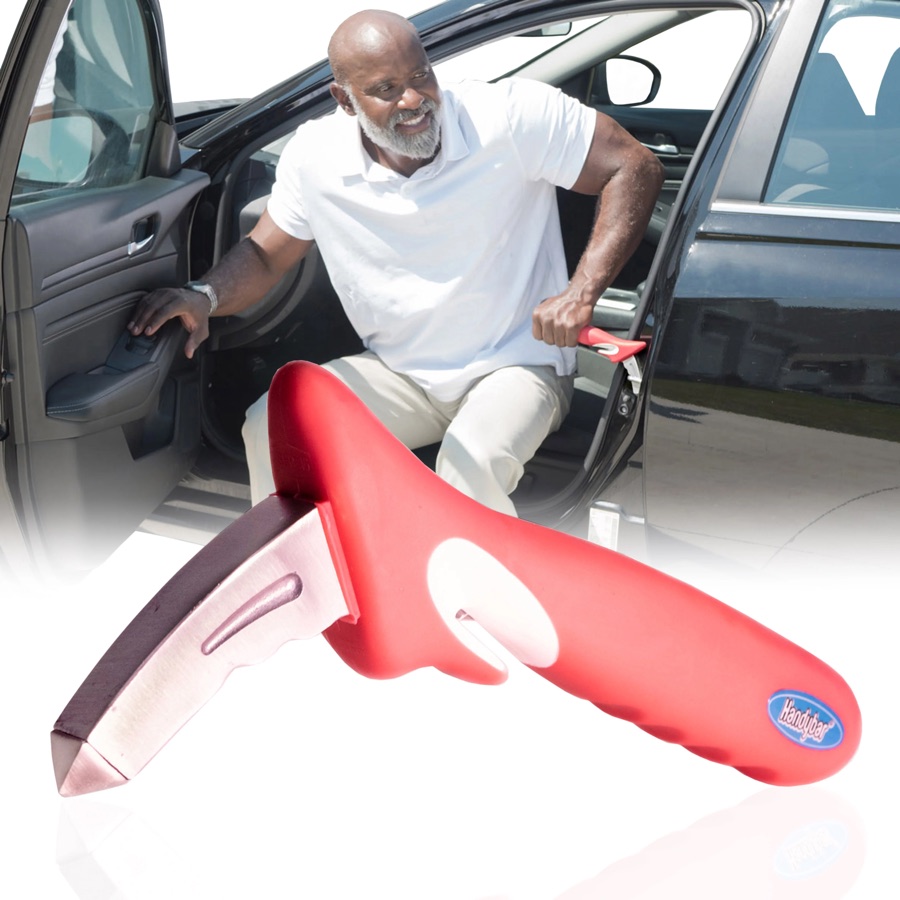
3Best for Getting Out of Low Sedans
Stander HandyBar Vehicle Support Handle
Stander
- Key spec
- 350 lb
Sedans and sports cars seat you low, and the hardest part of the drive is often standing up at the end. The HandyBar slots into the door striker to give you a solid push-off point, and its listing rates it to 350 lb. Check that your door has a U-shaped striker before you buy.
Why we like it
- Listed at 350 lb
- No installation, so it moves between your car, a partner's car and rentals
- Built-in seat belt cutter and window breaker for emergencies
Keep in mind
- Only works on doors with a U-shaped striker; vehicles with a single striker bolt can't use it
- If you weigh more than 350 lb you're outside the listed rating; use it as a balance aid with your legs doing the work
- Check the listing for the current rating before you buy
Which car measurements matter for big and tall drivers?
Four numbers show up on every spec sheet. Here's how to read them when you're shopping for a bigger body:
- Hip room is the one fat drivers should check first. It's measured side to side at hip level across the entire front row, door panel to door panel. The center console sits inside that number, so it tells you how much total width you and a passenger share, not the width of your seat.
- Shoulder room is the same idea at shoulder height. It matters if you're broad, and for how much you end up rubbing elbows with a passenger.
- Legroom is measured with the seat all the way back. Tall drivers want it; shorter fat drivers often care more about whether the wheel clears their belly once the seat is where their feet can reach the pedals.
- Headroom runs from the seat to the headliner. A moonroof or panoramic roof often shaves 1 to 2 inches off.
What the spec sheet won't tell you: how wide the seat cushion is between its side bolsters, how far the steering wheel telescopes, how high the door sill is, or how wide the console is. That's why the numbers get you a shortlist and a test drive gets you the answer.
Roomiest sedans, wagons and hatchbacks
Front seat, in inches. Where a trim with a moonroof or panoramic roof has less headroom, the lower figure is in parentheses.
| Vehicle (model year) | Headroom | Legroom | Shoulder room | Hip room |
|---|---|---|---|---|
| Kia K5 (2026) | 40.2 (38.4 pano roof) | 46.1 | 58.0 | 56.6 |
| Hyundai Sonata (2026) | 40.0 (37.8 pano roof) | 46.1 | 57.9 | 54.6 |
| Nissan Altima (2026) | 39.1 | 43.8 | 58.2 | 54.7 |
| Ford Mustang (2026) | 37.6 | 44.5 | 56.3 | 54.9 |
| Subaru Outback (2026) | 40.2 | 43.0 | 57.9 | 55.0 |
| Dodge Charger (2026) | 39.1 | 42.6 | 59.5 | 56.3 |
| Honda Accord (2026) | 39.5 (37.5 moonroof) | 42.3 | 57.9 | 55.4 |
| Toyota Camry (2026) | 38.3 | 42.1 | 57.7 | 55.4 |
| Honda Civic Sedan (2026) | 39.3 (37.6 moonroof) | 42.3 | 57.0 | 54.3 |
| Kia Soul (2025) | 39.9 (38.3 sunroof) | 41.1 | 55.5 | 53.5 |
Roomiest compact crossovers and EVs
| Vehicle (model year) | Headroom | Legroom | Shoulder room | Hip room |
|---|---|---|---|---|
| Tesla Model Y (2026) | 41.0 (40.0 base model) | 41.8 | 56.4 | 54.0 |
| Honda CR-V (2026) | 40.0 (38.2 EX, EX-L) | 41.3 | 57.9 | 55.6 |
| Hyundai Ioniq 5 (2026) | 39.8 (39.1 pano roof) | 41.7 | 57.7 | 53.9 |
| Toyota RAV4 (2026) | 37.9 | 41.0 | 57.0 | not listed |
Compact crossovers don't beat midsize sedans on width; their advantage is seat height. You slide across rather than dropping down, which is easier on knees and hips. For real width, keep reading.
Minivans: the sleeper pick for wide hips and shoulders
| Vehicle (model year) | Headroom | Legroom | Shoulder room | Hip room |
|---|---|---|---|---|
| Kia Carnival (2026) | 40.9 (39.7 SX trims) | 41.1 | 64.2 | 59.8 |
| Chrysler Pacifica (2026) | 40.1 (38.4 Limited, Pinnacle) | 41.1 | 63.8 | 59.0 |
| Toyota Sienna (2026) | 40.1 | 40.3 | 62.4 | 59.6 |
| Honda Odyssey (2026) | 38.7 | 40.9 | 63.1 | 58.6 |
Every minivan here beats every sedan we compared on both shoulder and hip room. The Carnival's 64.2 inches of shoulder room is 4.7 inches more than the widest sedan on our list, the Charger. Minivans also put the seat near hip height, and sliding doors make passenger entry easy. If you're not in love with minivans, the next step up is a three-row SUV or full-size truck; see our guide to the best SUVs and trucks for big drivers.
Our shortlist by body type
- Long legs: Kia K5 and Hyundai Sonata (46.1 inches). The Mustang's 44.5 is generous too, but it's a low sports car that's harder to climb out of.
- Wide hips and shoulders: Any minivan, led by the Kia Carnival. Among sedans, the Dodge Charger (59.5 shoulder, 56.3 hip) and Kia K5 (58.0, 56.6).
- Tall torso: Tesla Model Y upper trims (41.0), Kia Carnival lower trims (40.9), and the solid-roof Kia K5 and Subaru Outback (40.2).
- Best all-rounder sedan: The Kia K5 in a trim without the panoramic roof. It's at or near the top of the sedan list on every measurement.
The moonroof trap
The same car can lose real headroom depending on the trim. In current spec sheets, the Honda Accord goes from 39.5 inches to 37.5 with a moonroof, the Sonata from 40.0 to 37.8, the K5 from 40.2 to 38.4 and the CR-V from 40.0 to 38.2. Some spec pages list a single headroom figure even when a roof is optional, so sit in the exact trim you plan to buy.
How to test-drive a car for a bigger body
- Before you get in, ask the salesperson to move the seat all the way down and back.
- Set the seat so you can press the pedals fully, then check the wheel. The Insurance Institute for Highway Safety advises drivers to keep their chest at least 10 inches from the center of the steering wheel.
- Buckle up. IIHS says the lap belt should sit low on the hips or across the upper thighs, not the belly. If it won't reach, see our car seat belt extender safety guide.
- Check where the console and armrest hit your hip and thigh, and whether the side bolsters dig in.
- Get in and out three times. Door sills and low rooflines are often the real dealbreaker. Our guide to car entry aids can help.
- Drive for at least 20 minutes. Numb thighs usually mean the seat edge is pressing in. A cushion can help with that; see car seat cushions for heavy drivers.
Sources
Honda figures come from Honda's spec pages for the Accord, Civic Sedan and Odyssey. The rest come from Kelley Blue Book spec pages, with hip room from iSeeCars dimension pages where KBB doesn't list it: K5, Sonata, Altima, Mustang, Outback, Charger, Camry, Soul, Model Y, CR-V, Ioniq 5, RAV4, Carnival, Pacifica, Sienna. Specs change between model years and trims, so confirm with the dealer.
Frequently asked questions
What is the best car for a fat person?
There's no single answer, but on paper minivans like the Kia Carnival and Chrysler Pacifica have the most front hip and shoulder room of the vehicles we compared. Among sedans, the Kia K5 pairs 46.1 inches of legroom with 56.6 inches of hip room. Use the numbers to build a shortlist, then test-drive.
What does hip room mean in a car?
Hip room is the side-to-side width of the seating area at hip level, measured across the whole front row. It covers both front seats plus the space between them, so a 56-inch figure is not a 56-inch seat. It's most useful for comparing cars against each other.
Do sunroofs reduce headroom?
Usually, yes. In current spec sheets the Honda Accord drops from 39.5 to 37.5 inches of front headroom with a moonroof, and the Hyundai Sonata drops from 40.0 to 37.8 with its panoramic roof. If you're tall, the solid-roof trim is often the roomier car.
Which sedan has the most front legroom?
Of the 2026 sedans we compared, the Hyundai Sonata and Kia K5 lead at 46.1 inches. The Ford Mustang lists 44.5 and the Nissan Altima 43.8. Most other midsize sedans land around 42 inches.
What if the seat belt doesn't reach?
Ask the dealer's parts department for the automaker's own seat belt extender for that model and seat before buying anything aftermarket. Our car seat belt extender safety guide explains how to do it and what to avoid.
Get everything on this list
Send every pick to your Amazon cart in one click, or save them to My List to mix with picks from other guides.
How we pick: we compare manufacturer specs (weight capacity, seat width, size range), read reviews from bigger buyers, and check return policies. We don’t accept payment for placement. Specs change — confirm on the listing before you buy.