Reader-supported: we may earn a commission when you buy through our links, at no cost to you. As an Amazon Associate we earn from qualifying purchases. Learn more.
Compression socks only work when they fit. If your calf is 19, 24 or 27 inches around, a standard sock rolls down, digs a groove under your knee and leaves you more uncomfortable than when you started. A top band that bites can squeeze harder than the rest of the sock, which is the opposite of how graduated compression is supposed to work.
The fix is boring but it works: measure, then buy from a brand that publishes a calf range that actually includes you. Below are the wide-calf and plus-size socks where we could confirm the calf measurements, plus two good options where the brand doesn't publish clear numbers. This is gear guidance, not medical advice. If you have a circulation condition, your clinician gets the final say.
Quick picks
- 1Biggest Calf Range (to 27 in)Doctor's Select Plus Size Wide Calf Compression Socks, 20–30 mmHg (3 Pairs) calf up to 27 in View on Amazon
- 2Best Overall (Calves 18–24 in)JOBST Relief Knee High Compression Socks, 15–20 mmHg (Full Calf) calf up to 24 in View on Amazon
- 3Best for Active TripsPRO Compression Marathon Wide-Calf Socks, 20–30 mmHg calf up to 26 in View on Amazon
- 4Best Cotton BlendVIM & VIGR Cotton 15–20 mmHg Compression Socks (Wide Calf) calf up to 21 in View on Amazon
- 5Best Budget MultipackCHARMKING Plus Size Wide Calf Compression Socks, 15–20 mmHg (3 Pairs) XL–5XL per the listing View on Amazon
- 6Most StylishSockwell Women's Full Floral Moderate Graduated Compression Socks, Wide Calf Fit Women's S/M (shoe 4–7.5) and M/L (shoe 8–11) View on Amazon
Our picks
1Biggest Calf Range (to 27 in)
Doctor's Select Plus Size Wide Calf Compression Socks, 20–30 mmHg (3 Pairs)
Doctor's Select
- Fit
- XL–6XL (calf 15–27 in)
If your calf is past 24 inches, start here. The listing's chart runs from XL to 6XL, with 6XL for calves of roughly 25–27 inches, and you get three pairs to rotate on a long trip. It's rated 20–30 mmHg, a firmer squeeze than typical travel socks. If you've never worn that level, check with a clinician and wear them around the house for an afternoon before a 10-hour flight.
Why we like it
- Size chart runs to a 27 in calf at 6XL, the biggest range we confirmed
- Three pairs (black, gray, navy) to rotate on a long trip
- Sized by calf measurement, not just shoe size
Keep in mind
- 20–30 mmHg is a firm level; ask a clinician if you're unsure it's right for you
- Budget multipack, and the compression level isn't independently verified
- Check the size-chart image on the listing for your exact calf and ankle size
2Best Overall (Calves 18–24 in)
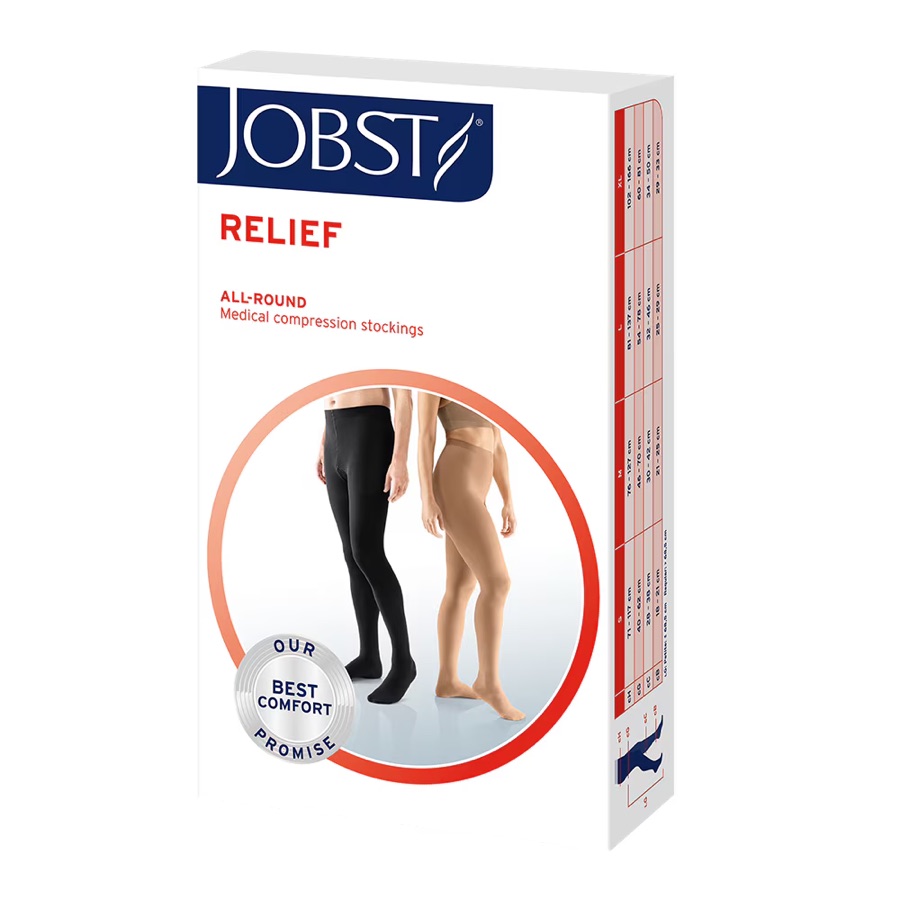
JOBST Relief Knee High Compression Socks, 15–20 mmHg (Full Calf)
JOBST
- Key spec
- calf up to 24 in
- Fit
- Large Full Calf and X-Large Full Calf (calf 18–24 in)
JOBST is a medical-compression brand, and its Relief line has true Full Calf sizes. Large Full and X-Large Full are both charted for 18–24 inch calves, and X-Large Full takes ankles up to 14 inches. At 15–20 mmHg it's the level most people wear for flying. It looks like a medical sock because it basically is one, so if fit matters more to you than pattern, this is the one.
Why we like it
- Full Calf sizes are charted for 18–24 in calves
- 15–20 mmHg, the moderate level most travel socks use
- X-Large Full Calf is charted for 12–14 in ankles, which helps if your ankles are wide too
Keep in mind
- Plain medical look in black or beige
- Calves over 24 in will need a different brand
- Medical-style knit takes effort to pull on; a donning aid or rubber gloves help
3Best for Active Trips
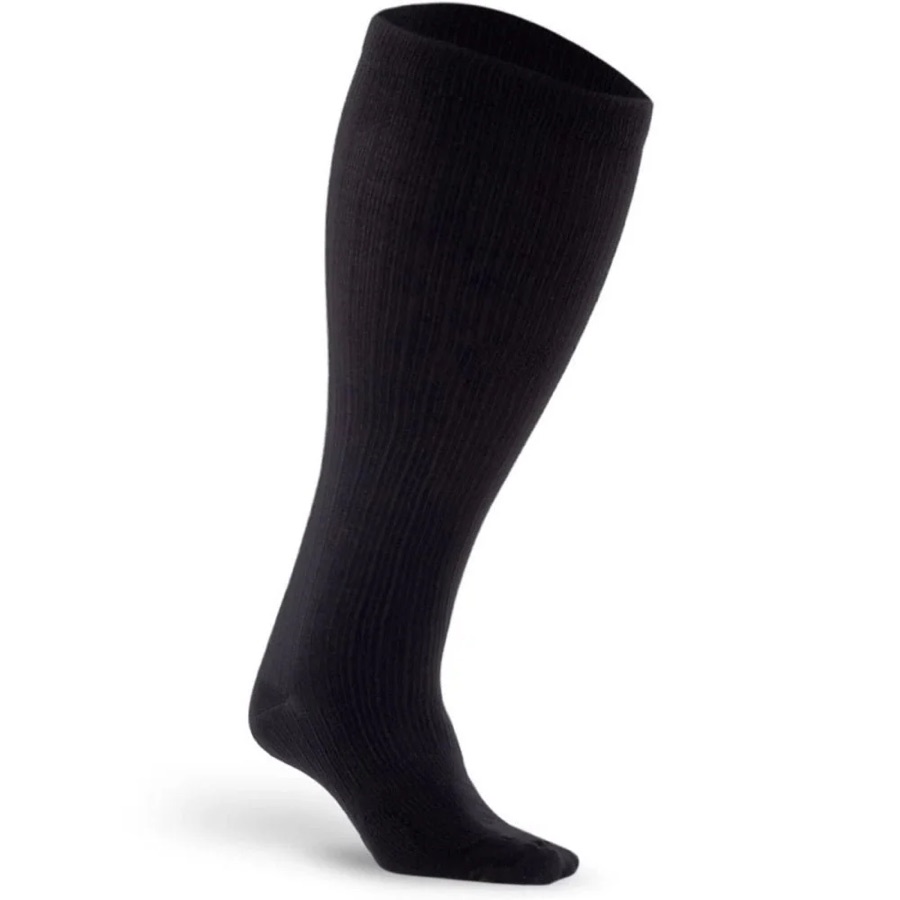
PRO Compression Marathon Wide-Calf Socks, 20–30 mmHg
PRO Compression
- Key spec
- calf up to 26 in
- Fit
- 2XL (calf 20–22 in), 3XL (23–24 in), 4XL (25–26 in)
PRO Compression sizes its wide-calf Marathon socks by calf first: 2XL for 20–22 inches, 3XL for 23–24 and 4XL for 25–26. They're calf-length athletic socks in lots of colors, a good fit for travel days that turn into walking days. Like Doctor's Select, they're 20–30 mmHg, so expect a firmer squeeze than a standard travel sock.
Why we like it
- Wide-calf sizes start at 20 in and run to 26 in
- Sized by calf circumference first, then shoe size
- Comes in many colors and patterns, not just medical beige
Keep in mind
- 20–30 mmHg is firmer than most travel socks; ask a clinician if unsure
- Athletic calf-length cut, not a dress sock
- Calves under 20 in will find the wide sizes loose
4Best Cotton Blend
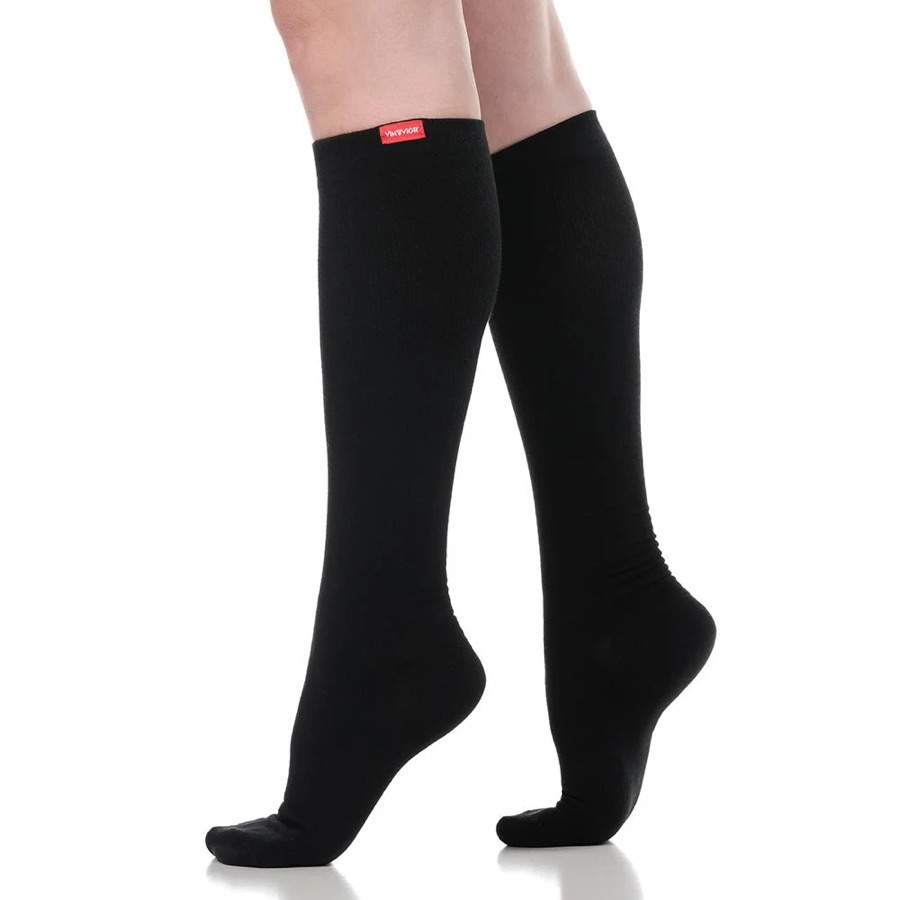
VIM & VIGR Cotton 15–20 mmHg Compression Socks (Wide Calf)
VIM & VIGR
- Key spec
- calf up to 21 in
- Fit
- S/M, M/L and L/XL Wide Calf (calf 17–21 in)
If your calves are wide but under 21 inches, VIM & VIGR's Wide Calf (WC) sizes fit 17–21 inch calves in three shoe-size bands. The cotton blend feels more like a regular sock than slick nylon does. Make sure the size you pick says WC, because the regular sizes are much narrower.
Why we like it
- Wide Calf versions in three shoe-size bands
- Cotton blend (48% cotton per the listing) that feels more like a regular sock
- 15–20 mmHg, the usual level for travel
Keep in mind
- Tops out at a 21 in calf
- Wide-calf bands are tied to shoe size, so a small foot with a big calf may need to size up
- Make sure the size you pick says WC; the regular sizes are much narrower
5Best Budget Multipack
CHARMKING Plus Size Wide Calf Compression Socks, 15–20 mmHg (3 Pairs)
CHARMKING
- Fit
- XL–5XL per the listing
CHARMKING sells a three-pair plus-size pack at 15–20 mmHg, listed up to 5XL. That's a cheap way to have a fresh pair for each leg of a trip. We couldn't confirm the calf measurements behind those sizes, so check the size chart on the listing against your tape measure before you order.
Why we like it
- Gentler 15–20 mmHg level in a plus-size, wide-calf cut
- Three pairs per pack
- Listed in sizes up to 5XL
Keep in mind
- Calf range not confirmed; check the size chart on the listing
- Some listings spell the brand 'CHARKING', so make sure you're on the right product
- Budget multipack, and the compression level isn't independently verified
6Most Stylish
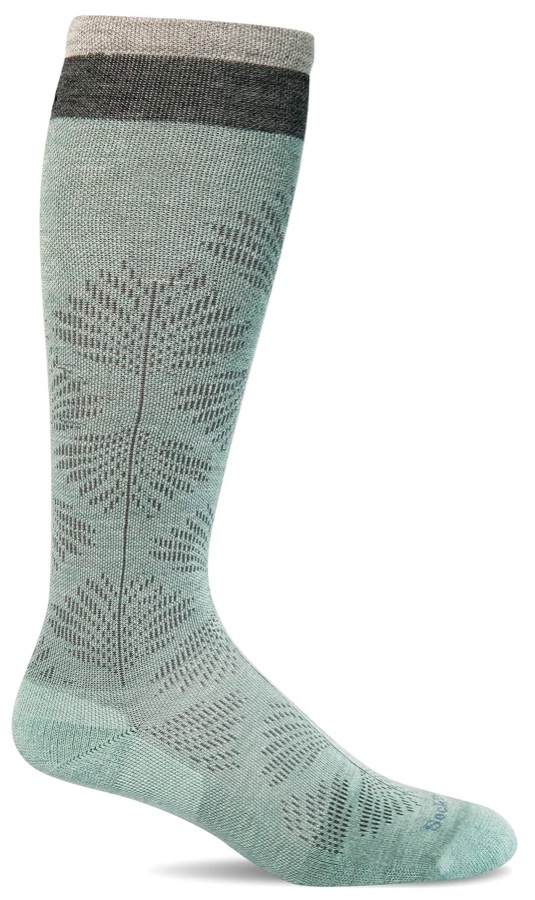
Sockwell Women's Full Floral Moderate Graduated Compression Socks, Wide Calf Fit
Sockwell
- Fit
- Women's S/M (shoe 4–7.5) and M/L (shoe 8–11)
Sockwell's Wide Calf Fit styles look like fun everyday socks, not hospital issue, at a moderate 15–20 mmHg. The catch is the numbers. Sockwell describes the wide-calf circumference only as about 17.5 inches with extra stretch, not as a range by size. They suit moderately wide calves. If you're well past 20 inches, pick from higher up this list.
Why we like it
- Patterned, everyday look rather than medical
- Moderate 15–20 mmHg level
- Sockwell sells several designs in the Wide Calf Fit
Keep in mind
- Sockwell describes the wide-calf circumference only as about 17.5 in, not as a size-by-size range
- Women's sizing only for this style
- Best for moderately wide calves; bigger calves should look at the JOBST, PRO Compression or Doctor's Select ranges
How to measure your calf for compression socks
Compression sizing runs on two numbers: the widest part of your calf and the narrowest part of your ankle. Shoe size comes third, and some brands (VIM & VIGR and Sockwell among them) tie their sizes to it.
- Measure in the morning, before the day's swelling builds. MedlinePlus gives the same advice for putting stockings on.
- Sit with your foot flat. Wrap a soft tape around the fullest part of your calf, snug but not squeezing. Write it down.
- Measure the narrowest point of your ankle, just above the ankle bone.
- Compare both numbers with the brand's chart. If you land between sizes, check the brand's note, because some say to size up and others say to size down.
Standard sizes run out sooner than you might expect. On the JOBST Relief chart, the regular Large tops out a little over 18 inches of calf and X-Large at about 19.6. The Full Calf sizes go to 24.
Wide-calf compression sock size chart
These are the calf ranges we could confirm, as published when we wrote this. Brands update charts, so check the current one before you order.
| Sock | Compression | Sizes | Calf range | Source |
|---|---|---|---|---|
| Doctor's Select Plus Size | 20–30 mmHg | XL–6XL | 15–27 in | Amazon listing |
| PRO Compression Marathon Wide-Calf | 20–30 mmHg | 2XL–4XL | 20–26 in | Amazon listing |
| JOBST Relief Full Calf | 15–20 mmHg | Large Full, X-Large Full | 18–24 in | JOBST Relief chart (AliMed) |
| VIM & VIGR Wide Calf | 15–20 mmHg | S/M, M/L, L/XL WC | 17–21 in | VIM & VIGR sizing guide |
| Sockwell Wide Calf Fit | 15–20 mmHg | S/M, M/L | About 17.5 in (no range published) | Sockwell wide-calf collection |
| CHARMKING Plus Size | 15–20 mmHg | XL–5XL | Not confirmed | Amazon listing |
What compression level is best for flying?
You'll mostly see two levels on travel socks:
- 15–20 mmHg (moderate). The usual over-the-counter level for travel and long stretches of sitting. JOBST Relief, VIM & VIGR, Sockwell and CHARMKING all sit here.
- 20–30 mmHg (firm). A tighter squeeze. Many of the widest plus-size ranges, including Doctor's Select and PRO Compression's wide calf, only come at this level.
Firmer isn't automatically better. A 15–20 sock that fits does more good than a 20–30 sock that rolls into a band. If you need the bigger range and you've never worn firm compression, try it at home first.
Compression socks and blood clots on long flights
The CDC's page on blood clots and travel says trips of more than 4 hours, by air, car, bus or train, raise the risk of a clot. Its list of risk factors includes a previous clot, recent surgery or injury, pregnancy, estrogen-based birth control or hormone therapy, age over 40 and obesity, and the risk rises as factors stack up. The CDC recommends:
- Walking around every 1 to 2 hours when you can.
- Stretching your legs and flexing your ankles while seated.
- Talking to your doctor before you travel if you're at higher risk. The CDC notes that some people may benefit from graduated compression stockings.
The CDC also lists the warning signs: swelling, pain, warmth or redness in a leg or arm means calling your doctor. Trouble breathing, chest pain or coughing up blood means getting emergency help.
Check with a clinician first if any of these apply
Compression isn't right for everyone. Talk to a clinician before you wear it if you have:
- A history of DVT or other blood clots
- Peripheral artery disease (PAD) or other arterial disease in your legs
- Diabetes with neuropathy, since reduced feeling makes it harder to notice a sock that's too tight or rubbing
- Fragile skin, open wounds or sores on your legs
Whatever your health history, take the socks off if you get numbness, tingling, color changes or pain.
How to get compression socks on (and keep them up)
- Turn the sock inside out down to the heel, put your foot in, then roll it up your leg. Smooth out wrinkles as you go.
- Rubber gloves give you grip. A sock donner helps if bending to your feet is hard. Both tips come from MedlinePlus.
- Never fold the top band over. A doubled band squeezes much harder than the rest of the sock.
- Pack a second pair for the flight home.
Planning the rest of the flight? Our long-haul flight comfort kit covers seat cushions, neck pillows and sleep gear, and plus-size flying tips covers seats and boarding.
Frequently asked questions
What size compression socks do I need for a 20 inch calf?
At 20 inches you're past most standard sizes and near the top of VIM & VIGR's 17–21 inch Wide Calf range. JOBST Relief Full Calf (18–24 in) puts you closer to the middle, and PRO Compression's wide-calf 2XL starts at 20. Pick a size where your measurement sits inside the range, not right at the edge.
Are 20–30 mmHg compression socks too strong for flying?
Not necessarily, but they squeeze harder than the 15–20 mmHg level most travel socks use, and several of the biggest plus-size ranges only come in 20–30. If you have a circulation condition or have never worn compression, ask a clinician which level suits you and do a trial run at home first.
Do compression socks prevent blood clots on flights?
The CDC says some people may benefit from graduated compression stockings, and it recommends talking to a doctor before travel if you're at higher risk. For trips over 4 hours it also recommends walking around every 1 to 2 hours and flexing your ankles. Socks help, but they don't replace moving.
Why do my compression socks keep rolling down?
Usually the top band is too narrow for your calf, or the sock is too long and the band lands behind your knee. Measure again at the widest point and check the length, since some brands sell shorter and longer versions. If a sock rolls into a tight band, take it off, because a rolled band squeezes far harder than it should.
Can I wear compression socks if I have diabetes?
Ask your clinician first, especially if you have neuropathy. Reduced feeling in your feet makes it harder to notice a sock that's too tight or rubbing. They can tell you whether compression suits you and at what level.
Get everything on this list
Send every pick to your Amazon cart in one click, or save them to My List to mix with picks from other guides.
How we pick: we compare manufacturer specs (weight capacity, seat width, size range), read reviews from bigger buyers, and check return policies. We don’t accept payment for placement. Specs change — confirm on the listing before you buy.